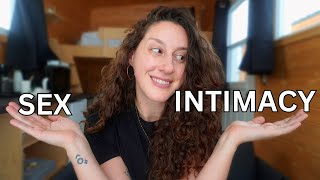
Can we talk about something that society desperately needs to get comfortable with? Older people have sex. They want sex. They enjoy sex. And for many of them, the sex they are having in their sixties, seventies, and beyond is some of the best they have ever had. I know that might make some people squirm, but that discomfort is exactly why this conversation matters.
We live in a culture that is obsessed with young sexuality. Every advertisement, every movie, every magazine cover tells us that desire belongs to the young and conventionally attractive. And the moment someone ages past a certain invisible threshold, their sexuality becomes either invisible or, worse, the punchline of a joke. That is not just unfair — it is genuinely harmful to millions of people who still have rich, vibrant intimate lives.
The Bodies Change, But Desire Doesn't Disappear
Let me be honest: aging does bring real physical changes that affect sexuality. Hormonal shifts can impact arousal and lubrication. Erectile changes are common. Joints get stiffer, energy levels fluctuate, and chronic health conditions can add layers of complexity. None of that is news to anyone who has lived past fifty.
But here is what people often miss: these changes do not eliminate desire. They reshape it. Many older adults describe their sexuality as more expansive, more creative, and more emotionally connected than it was in their younger years. When the pressure of performance-based sex fades — the need to last a certain amount of time, to look a certain way, to achieve orgasm in a specific manner — something beautiful can emerge in its place.
The Liberation of Letting Go
One theme that comes up repeatedly when older adults talk about their sex lives is freedom. Freedom from caring what others think. Freedom from the performance anxiety that dominated their younger years. Freedom to ask for what they want without embarrassment. There is something profoundly liberating about reaching a stage of life where you simply do not have the energy to pretend anymore.
Many older people describe discovering new aspects of their sexuality well into their later decades. Some explore kink for the first time. Some come out as queer after a lifetime of suppression. Some simply learn to communicate their needs with a directness that would have terrified their younger selves. Age, it turns out, can be a powerful permission slip.
The Challenges Are Real
I do not want to paint an unrealistically rosy picture. There are genuine obstacles that older adults face when it comes to sexual health and intimacy. Healthcare providers often skip conversations about sex with older patients, operating under the assumption that it is no longer relevant. Sexual health education for older adults is virtually nonexistent. And for those living in assisted care facilities, privacy for intimate encounters can be extremely difficult to come by.
Loneliness is another massive factor. Losing a long-term partner through death or divorce can leave people feeling like their sexual selves have died too. Reentering the dating world at sixty or seventy comes with its own unique set of challenges — navigating dating apps, dealing with body image insecurities that are amplified by an ageist culture, and finding partners who are willing to be patient and communicative.
What Younger People Can Learn
Here is something that might surprise you: younger people have a lot to learn from the way older adults approach sex. The emphasis on connection over performance. The willingness to slow down. The understanding that intimacy is not just about intercourse but about the full spectrum of physical and emotional closeness. These are lessons that could benefit people at any age.
We also need to normalize the idea that our sexuality is not a fixed thing that peaks at twenty-five and then declines. It evolves. It changes shape. Some seasons of life are more sexually active than others, and that is perfectly normal. The goal is not to maintain the sex life you had at twenty-five forever. The goal is to keep growing, keep exploring, and keep showing up with curiosity.
Keep the Conversation Going
If you are an older adult who resonates with this, I see you. Your desires are valid, your needs matter, and you deserve a culture that acknowledges and supports your intimate life. And if you are younger, I hope this has shifted your perspective even a little bit. Because we are all aging, and the way we talk about sex and older adults today shapes the world we will live in tomorrow.
Watch my full video for a deeper dive into this topic, including some incredible insights from people who are living this reality every day. It is one of my favorite conversations I have had on this channel.