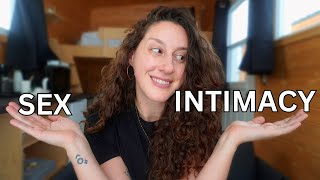
This is one of those topics that I feel strongly about and that I think doesn't get nearly enough attention in the sex education space. People with disabilities are sexual beings. They have desires, fantasies, needs, and the same right to pleasure and intimacy as anyone else. And yet, society has a long, uncomfortable history of treating disabled people as though their sexuality either doesn't exist or shouldn't.
I made this video because I believe that sex education should be inclusive by default, not as an afterthought. If we're going to have honest conversations about human sexuality, those conversations need to include everyone — not just people whose bodies and abilities fit a narrow, conventional standard.
The Desexualization of Disabled People
One of the most harmful things society does to people with disabilities is desexualize them. From a young age, disabled people often receive the message — sometimes explicitly, sometimes through absence — that sex isn't for them. Sex education programs rarely address disability. Media representation of disabled people almost never includes their sexuality. And well-meaning but misguided family members and caregivers often avoid the topic entirely.
The result is a whole population of people who grow up feeling like their sexual desires are somehow inappropriate or unwelcome. And that's not just sad. It's a form of erasure that has real consequences for mental health, self-esteem, and quality of life.
The Barriers Are Real But Solvable
Let's acknowledge that people with disabilities do face real barriers when it comes to sexual expression. These can include physical limitations, pain, fatigue, medication side effects, accessibility of spaces and products, and the challenge of finding partners who see them as sexual beings rather than objects of pity or inspiration.
But here's the thing: barriers aren't the same as impossibilities. With creativity, communication, and the right resources, most of these barriers can be worked around or overcome. Adaptive sex toys exist. Positioning aids exist. Sex therapists who specialize in disability exist. The solutions are out there — what's missing is the conversation that connects people to them.
Some specific areas where progress is being made:
- Adaptive devices — sex toys and aids designed for people with limited mobility or dexterity
- Sexual surrogacy — trained professionals who help people with disabilities explore intimacy
- Inclusive sex education — programs that address the specific needs and questions of disabled people
- Accessible spaces — venues and events that prioritize physical accessibility for intimate experiences
- Online communities — forums and groups where disabled people can discuss sexuality openly
What Partners Need to Know
If you're dating or in a relationship with someone who has a disability, your role is the same as in any relationship: be a good communicator, be open, be patient, and be willing to adapt. The specifics of what that looks like will vary depending on the disability, but the principles are universal.
Don't make assumptions about what your partner can or can't do. Ask. Don't treat their disability as the defining feature of your sexual relationship. It's one factor among many. And don't fall into the trap of either ignoring the disability entirely or making it the sole focus. The sweet spot is acknowledging it openly while keeping the focus on shared pleasure and connection.
The Role of Healthcare Providers
Healthcare providers play a crucial role in this conversation, and too many of them are failing at it. When doctors, therapists, and rehabilitation specialists avoid discussing sexuality with their disabled patients, they reinforce the message that sex isn't something disabled people should expect or pursue. That silence is harmful.
Ideally, discussions about sexuality should be a standard part of care for anyone living with a disability. Questions about sexual function, desire, and satisfaction should be asked proactively, not left for the patient to bring up — because many patients won't, out of embarrassment or the assumption that their provider doesn't consider it relevant.
Changing the Narrative
What I want most from putting this topic out into the world is a shift in how we think about disability and sexuality. Not as separate categories that rarely overlap, but as two fundamental aspects of human experience that intersect in complex and important ways. Every person deserves to be seen as a whole human being, and that wholeness includes their sexuality.
If you want to learn more about this topic, including some incredible perspectives from people with disabilities who've shared their experiences with me, watch the full video. And if this is something that affects you personally, please know that you are seen, your desires are valid, and you deserve every bit of pleasure and connection that life has to offer.